

Resonance Interview | Rose Riebl
Australian composer Rose Riebl speaks with Hollie Kenniff following the release of her new LP 'Dust' out now

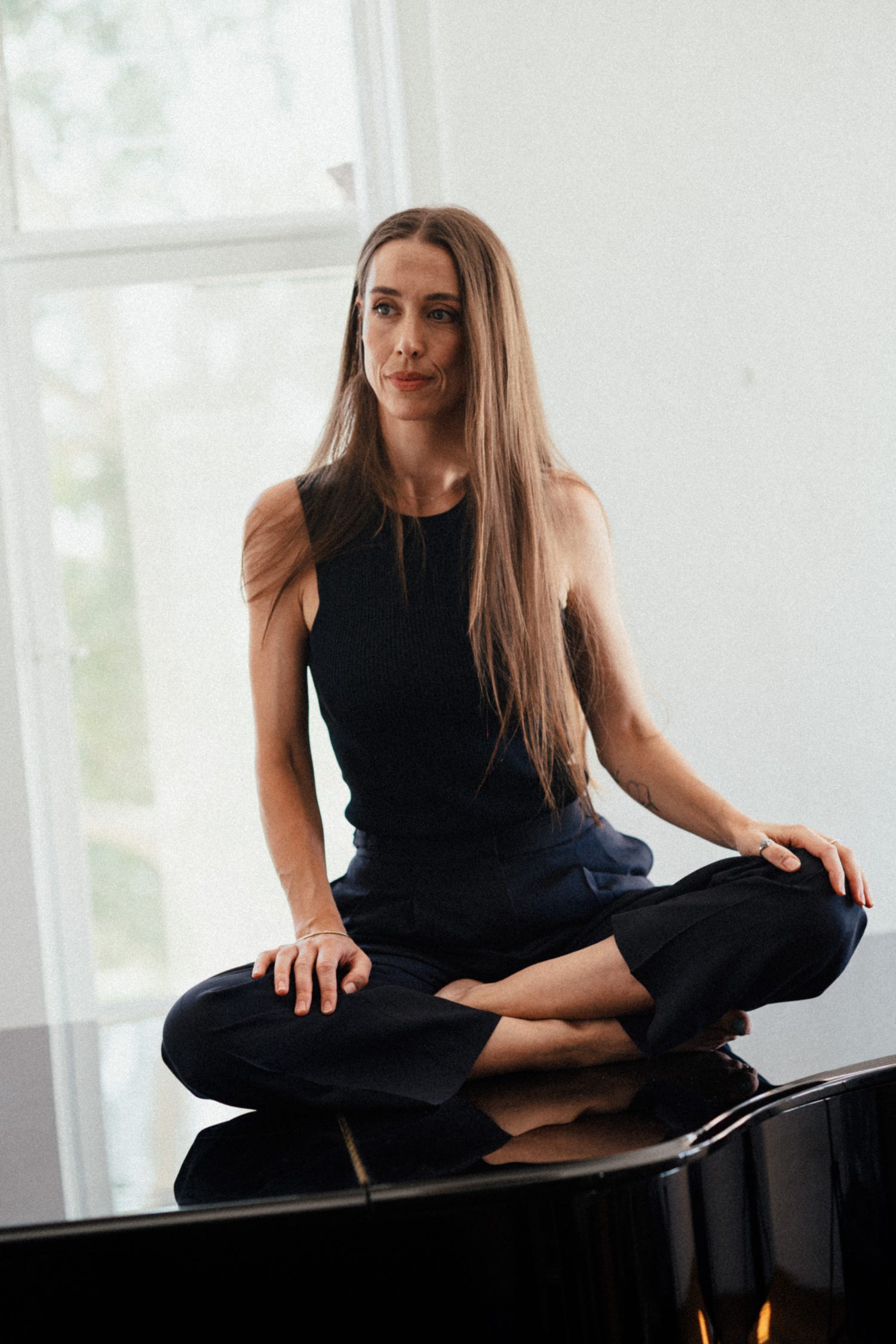
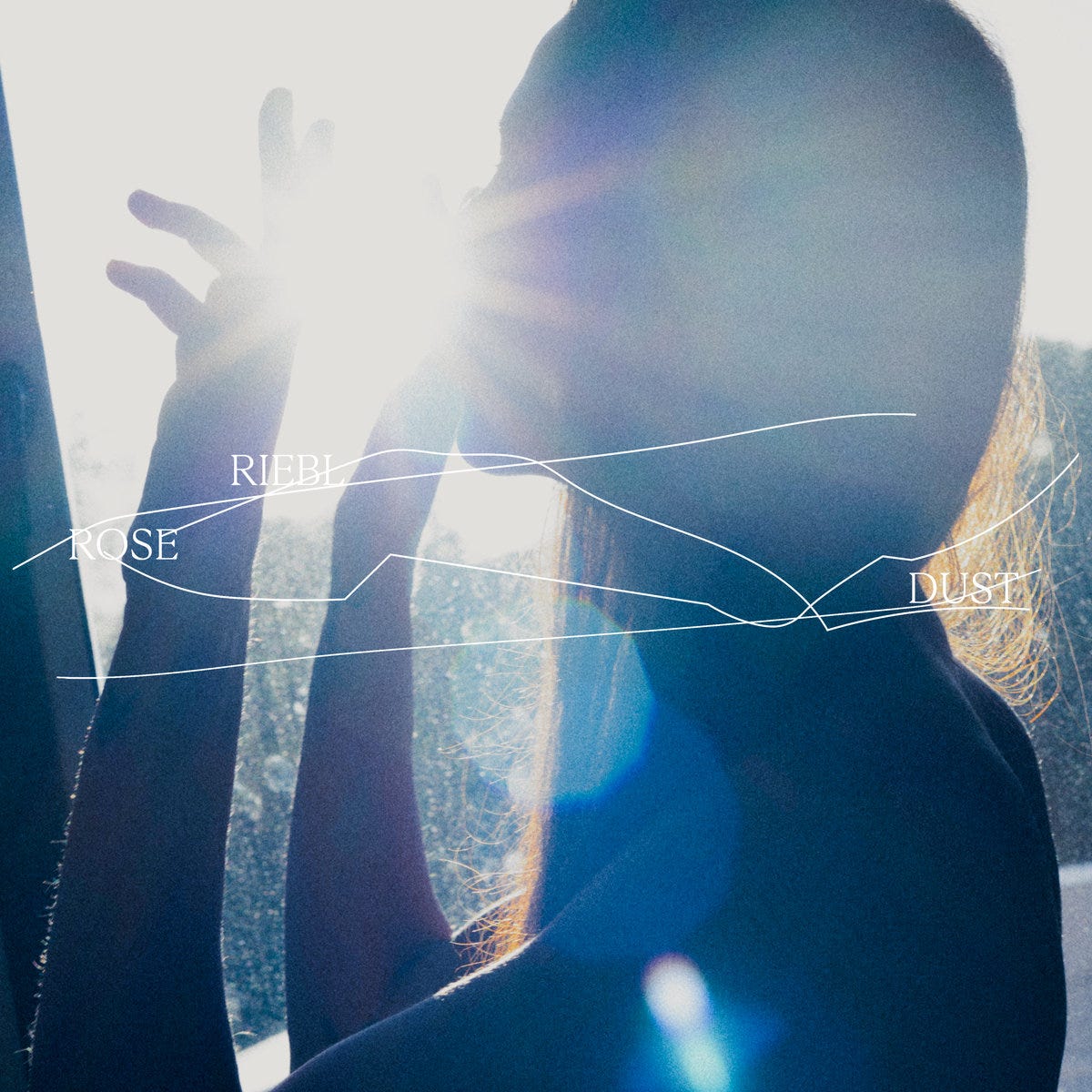
Your second album Dust is described as emerging from deeply personal moments such as loss, renewal, and expansive emotional space. With instrumentation stretching beyond piano into guitars, drums, ambient textures, and even your first lyric-writing on the track ‘Falling’, how did you approach expanding your sonic palette for this album, and how did those new textures change what you felt you were able to express compared to your earlier work?
As with most things I do creatively, these instruments, pallets and ideas presented themselves to me - I didn’t go looking for them. When I wrote unbound I heard drums in my head, and when I sent the track to Danny [Farrugia] he sent back the literal heart beat of this song. Guitar is one of my favorite instruments and I think there’s a beautiful overlap in neoclassical music between more classical instrumentation and influence (piano, cello, violin) and ambient pop (electric guitar, synths, ambient soundscapes). I felt a real freedom exploring songs with these instruments, and really sonically supported as I created my first lyric track. There’s nothing like several layers of guitar textures to help a song feel really powerful.
You spent many years in the classical piano world before shifting your focus more intentionally toward composition. What prompted that shift, and how did your classical training inform the composer you are now?
Everything I know about composing has come from playing and studying classical pieces. I’m not an academically trained composer, but I am a very intuitive one. The first pieces I ever composed were scribbled inside the front and back covers of my book of Beethoven Sonatas when I was a kid. The harmonies, textures, soaring melodies of these composers are unparalleled, and I learned from them, as well as the pop, EDM and ambient music I listened to, and then found my own voice.
You have performed throughout Australia and toured Asia as a concert pianist. Was there a tour or performance that felt especially pivotal in your artistic development?
Not one specifically! I think the most pivotal moment was actually when I stopped playing for a time. I had this huge gap in my life and knew that music was the thing I was missing, but that it had to be in a different form. That was the start of my transition from playing other people’s music (classical pianist) to playing my own.
Much of your music is described as “fragile, soulful and transcendent”. Could you walk us through your typical creative process when composing a new piece of music? Has becoming a mother changed your creative routine or the way you navigate the balance between family life and your work as a composer?
Becoming a mother has definitely changed the creative process! Time is incredibly scarce and therefore incredibly precious. My creative process used to be long & meandering, composing across whole nights until early hours of the morning, knowing that I could catch up on sleep the next day. My days and nights are very different now, so composing happens in short, intense bursts. I am really enjoying collaborative processes, film scoring, playing in groups. Writing for new instruments. It’s important I think to keep changing, evolving, staying curious.
In an interview you spoke about starting with the instrument, playing freely and uninhibited, without judging the process. When you allow that kind of unrestricted playing, what kinds of musical or emotional landscapes tend to emerge?
Whatever the emotional weather is of that period.
You’ve said that silence plays an important role in your work, and that piano remains your first language. How do you decide when to use silence, when to hold back versus when to build up in sound?
There is no one rule here, for me it’s all intuition. When to say more, when to hold back. Someone once gave me some great advice, and said if a song or a mix isn’t working, start by taking things out (or levels down) and that’s a rule that’s helped me a lot. I think people tend to layer more and more and think that will make a song better, but it’s not always the case.
Many reviews note your interest in the elemental and universal - tides, ocean, stardust, the “seed of life” in music. What draws you to these large, almost cosmic themes, and how do they manifest in sound?
I love the writing of Carl Jung, Mary Oliver, Marquez, Alan Watts, I love the rhythm of the ocean, the tides, the moon. I’m interested in our spiritual belonging and connection to each other and the earth. The idea that we’re all leaves from the same great tree, that when we die we’ll return like a wave (a drop) to the ocean. I find these things carry me through life in a way that feels spiritually elevated, magical, grounding.
You have spoken about how both grief and joy, stillness and movement, inform your work. How do you balance those dualities in your creative life and in your compositions?
I think DUST in particular has brought these dualities into closer conversation. I want to write albums that are emotionally charged, but that also make you want to dance or run or move. I’m not so interested in just writing sad cinematic music, I’m really inspired by instrumental music that’s also expansive, hopeful, energizing.
If you could go back and speak to the younger version of yourself, say at age 17 when you were training classically, what advice would you give?
All roads lead to where you’re going: trust it, follow it.
Having taught piano for close to two decades, how has your teaching practice fed back into your own creative work as a composer and performer?
I heard something beautiful the other day, a cellist talking about when she’s nervous performing on stage she imagines a huge light radiating from her chest and shining on her whole audience, connecting them all. I feel something similar when I perform, and often think of it as a sort of communion, a circular interaction. Teaching is similar, it’s an energy exchange. I learn from my students, they learn from me. Everyone is different, and I’m part of an incredibly beautiful community. That’s probably the part of teaching that most informs my composing and performing. Everything is connected.
Finally, what’s one piece of music, one artist, or one moment that’s inspired you recently - maybe unexpectedly, and why?
Oh an album I’ve really loved lately has been Lisa Hannigan ‘Live in Dublin’. I always find it so inspiring to listen to live albums, especially when I’m performing myself. The energy, life, magic captured in a group of musicians playing together totally inside the sound, there’s nothing like it! Electric.
Find Rose Riebl on:
Website / Instagram / YouTube / Apple Music / Spotify