

Resonance | Interview: Ocoeur
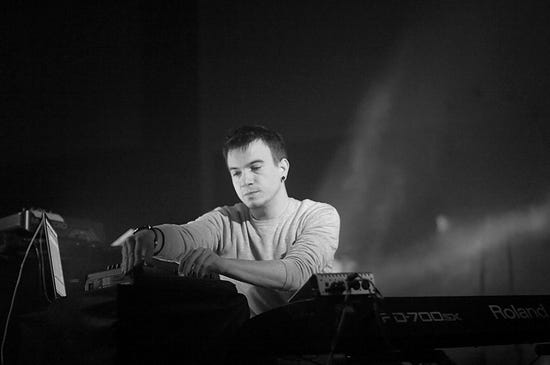
Martina Betti (Shedir) talks with ambient composer Franck Zaragoza (Ocoeur)

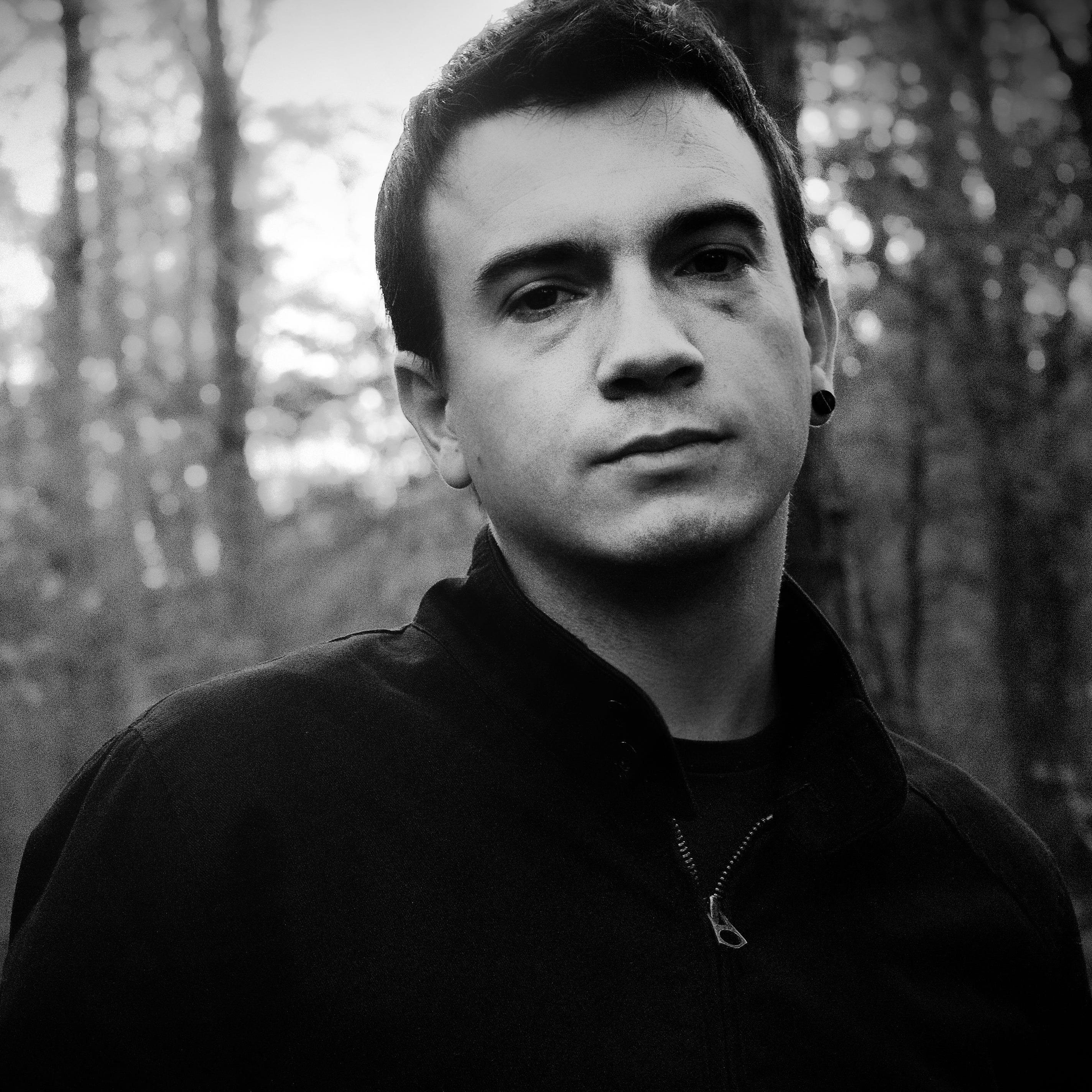
I’m very happy to reconnect with you and to have this conversation, especially after listening to your latest album, Greener Grass, Clearer Water. In your music, I found a sense of grace and solemnity that belongs to a kind of beauty greater than ourselves, something that feels as though it has always existed. There is also a sense of sacredness throughout the album. What strikes me most is the way you blend the colors of sound: within your compositions, darkness and light coexist in a perfectly natural balance. It is not a harsh record; it feels soft, spacious, welcoming. It seems to give the listener time to find their own place in the face of something vast and boundless. Perhaps it is that sea evoked so vividly in Remember the Sea…
Hi Martina, first off, I want to say that I am very honored to have this little conversation with you. It makes me very happy to see that you have listened the album in this way. You got it absolutely right, I wanted to express our connection with humanity, with all the species and of course our mother Earth.
The title Greener Grass, Clearer Water evokes not only a natural landscape but also a tension toward something more essential, clearer, or perhaps even unreachable. At the same time, I never sense idealization or nostalgia in the music, but rather a more fragile and ambiguous presence, almost an attempt at reconnection with the landscape, with time, or perhaps even with oneself. What does the album’s title represent for you?
That’s a very interesting point of view. Thanks for sharing it ! This sentence, that became a title, is actually not from me but from a Vietnamese monk named Thich Nhat Hanh. I have read few books of his, mostly about mindfulness, which have inspired me a lot over the last few years. The title actually evokes the way we treat ourselves and therefore the way we treat our surroundings. If we could become more conscious of our acts and their consequences, our inner peace would affect positively not only our environment, but also our family and our friends. The full quote is « When a wise man is born, the water from the river becomes clearer and the grass greener ».
Do you feel you are searching for something in music today that perhaps you were not searching for at the beginning of the Ocoeur project?
Good question, I don’t think I am really « searching » for something specific in my music as I never really think while I write or record. However, I indeed try to be as close to my emotions as I can. It means that in order to express something purely, I also need to first the spend time in finding the right sounds that will speak the most to me. It is like trying to let myself go completely with those sounds and to be as sincere as I can. That’s, maybe, what I am searching for.
In your recent work, there seems to be less emphasis on rhythmic structure and more attention given to duration, suspension, and the slow transformation of sound. I sensed a strong feeling of space and air, almost a desire to let the music breathe. The compositions seem to invite the listener to slow down and to experience the world in a different way. Does your current musical output emerge more as a reaction to the way we live today?
Yes, the absence of beats is intentional as I feel they don’t bring anything meaningful to my more recent compositions. Since « Nouveau Départ », I am in a path of slowing down and focusing on an inner reconnection with myself. It has helped me opening my eyes more widely about what is really going on both within ourselves and in the world. Especially after COVID. The absence of beats helps me to share something at the opposite side of aggressiveness. I feel like expressing peace or vigilance through music (or different type of art) is an amazing opportunity. Not only to express, but to share something more realistic and hopeful–something positive that is never completely gone, especially if we remember that the world is a beauty, if we know how to touch it.
Do you think places leave traces within sound?
I believe in the interconnection of everything. Because nothing comes from nothing or the opposite, nothing really vanishes. It is pure science. It’s like the butterfly effect. So why this rule would change with the phenomena of sound. Somehow, things always continue in other forms, in other ways and never vanishes. Like places, sounds or both.
Listening to your music, I sometimes have the impression that certain landscapes, whether real or internal, continue to exist beneath the surface of the compositions, even when they are not explicitly evoked. Are there places that you feel you have unconsciously carried into your records?
Probably yes, but like you said I’m not necessarily conscious of it while I record something. However, it is certain that my inspiration comes from personal experiences. I need to have private moments in nature, to reach silence and peace. Sometimes in the forest, sometimes close to the ocean or simply here at home, with my plants.
Looking at the cover artwork of Greener Grass, Clearer Water, I was reminded of certain Japanese landscape prints, especially in the way emptiness, silence, and nature seem to coexist without ever truly imposing themselves. It gave me the feeling of an image that does not want to describe a specific place, but rather a perceptual state. How important is it for you that the visual aspect of your records resonates with the way you shape sound?
Very important. But it always comes last in the process as I only focus on music first. That pencil sketch is made by my life partner Zinovia Arvanitidi. We often enjoy moments painting and sketching outside. So this print wasn’t a commission, but a result of a quiet moment that came out as a perfect coincidence. I feel It is a meaningful response to the spirit of the album.
Do you think it is possible to create contemplative music without it becoming a form of escape from reality?
To me contemplative music is not a form of escape from reality but a way to reconnect with it. Not only with reality, but with ourselves, our emotions and our deepest feelings. Contemplative music can be of many genres and not only ambient, like classical pieces or even cinematic music.
I would like to share a thought central to my own creative process. At times, I fear peace and inner quietness because I feel that what appears completely resolved can become static, motionless, and closed. As for me, it is often through friction with the world, and with myself, that I find the most vivid nuances, those subtle tensions that push toward searching, building, and movement. Is this form of creative internal tension the same for you?
How important is it, in your music, to remain aware of intimate wounds, of the pain surrounding us, or of that sense of fracture running through the contemporary world?
That’s very interesting. Although, I am not certain that we can call this peace if it brings a sort of fear or even a sense of emptiness. Like you said in the beginning, there is darkness but there is also light, and none of those could exist without the other. I feel that nothing is never static but more like in constant evolution. The tensions, the wounds, the chaos and the illusions that emanate from this world are a sort of bell to remind me to slow down, focus and understand myself. A means to learn how to let go of my illusions and how to take care of my inner wounds. Silence or inner quietness is not an escape but a way to see clearly, to remind me to stop searching or to stop running but to treat myself and my surrounding differently. It is a fresh energy, like an ally, that embraces my feelings and gives me a clarity of mind, leading to that inner peace that let me drop the weights on my mind and help me to express the beauty and the compassion I feel for this world.
In this sense, do you feel that your music tends more to offer shelter or to accompany a transformation?
Well, it can be either or both. My music is made from the instant, with a specific feeling and without having control of how it will be perceived in the future. This is how I keep sincerity. I think what generates a different theme on each of my albums is the state of mind I have at the moment. I could compare this with a garden where I’d plant different seeds; I can take care of my plants, the way they grow, but I cannot control the way people will perceive them.
Some works seem to emerge from a very precise vision, while others feel born of a more intuitive, unstable search. What emotional state feels more fertile to you when composing: clarity or confusion?
I am spontaneous in my music, so it can be anything, but I want to keep coherence. If there is confusion, I need to be conscious of it and see if I want to keep it or not. Because I believe the world is already made of a lot confusion. That’s why I want to deliver the best side of me, that I know for sure.
In your case, do you feel that you compose in order to understand something, or to remain inside a feeling?
I generally prefer to let my emotions out, without having existential questions. I remain in the moment. I like to open a project and just play, without necessarily trying to search for a meaning or to understand something specific.
I believe there is a particular moment in which a composition can lose something precisely in the attempt to complete itself. Have you ever abandoned a piece because it had become “too resolved”? Have you ever felt that an excess of clarity diminishes the mystery of a piece?
I agree with you. I like to keep sincerity as much as can, to keep the music direct. It is true that I have altered some of my tracks by spending too much time on details, by adding elements that are worthless. In the end the essence of it is lost, not only its mystery but also its core.
What usually survives at the end of your creative process–Texture, melody, rhythm... or emotion?
Emotion, without a doubt. The elements like melodies, rhythms or textures have to fit and support the emotions, never the opposite.
I’m interested in the idea of what remains after all the layering, revisions, and subtraction. Do you feel that each piece still preserves the emotional core from which it originally began?
Yes, I believe I do. Spontaneity is my way to express my most raw and pure emotions. The key in my creative process is to dedicate days to create presets for synth, effect and even templates, so that I can spend time to record another day, on the spot, without thinking. Generally, I compose a piece within a day only. By experience, when I spend too much time on a piece, it’s never a good sign and it means that I am getting lost in the process. That’s why the revisions are mostly about the mix and not the composition. I only try to enhance, the sublime core of what I have freshly expressed.
At times, I have the impression that in electronic music, technical control can become a form of emotional protection. Do you ever feel a tension between control and vulnerability while composing?
Very interesting question. No not really, there is not such thing in my creative process. At least not over the last 3 years. However, I could mention a sense of tension in some of my early works, like some tracks from « Light as a feather » and « A parallel life » mostly. I believe that my music production was affected by a sense of obsession in the technical aspect. Especially in the addition of effects and glitches. But I don’t think it was an emotional protection or even a sense of vulnerability but more an expression of my own energy and excessive confusion from this time.
In your work, technical precision often coexists with a strong emotional and organic component. Do you feel closer to the physicality of hardware or to the freedom of digital tools?
Thank you! Actually yes. I think I rely the mostly on the practicality of digital tools. Especially today where digital synth and effect can sound really amazing. I know this has been an endless debate for many people, but I believe that feelings prevail and that the means in which to create can be sometimes be secondary.
And do you think that instruments truly influence the emotional way in which a composition takes shape?
Yes, I do. But I believe that the opposite is also possible. Not only the choice of an instrument but also the way you play it. Because I also think that you make one with your instrument, according to you and your state of mind. Instruments, or sounds generally, transcribes different feelings. So there isn’t really an « influencer » or a leader. As for me, I have always found that piano and Rhodes sound very poetic. It makes me want to play accordingly, in a very soft and emotional way. But I can also mention the pads. Most of the time, I imagine them very aerial, melodic and textural, like an embrace. So I truly believe that the instruments becomes an extension of us and that the sound that is produced really depends of how we want to express our emotions.
I noticed that in your records, French and English titles coexist. It gave me the impression of a language that refuses to belong entirely to a single place or boundary, almost as if language itself were a space of transition and fusion. Is this an instinctive choice, or is there a deeper reason behind this alternation of languages?
Good point. This is only a matter of how the language responds to what I feel. Sometimes French, which is my mother tongue, defines in a better way the poetic aspect of my tracks than English. It is more about sonority of the language because I believe that language is also musical the way it sounds. « Le chemin du retour » for me would have sounded plain in English compared to how it sounds in French. On the other hand « Let go » would sound absurdly funny in French.
Is there an artist, either musical or belonging to another form of expression, whom you feel as a kind of “guiding star” within your creative journey? And what qualities or characteristics in their work continue to guide or inspire you today?
Oh yes, they are many … Integrity is what inspires me the most in artists and not matter the form of expression it belongs. I admire when someone manages just to be authentic, without trying to fool you. As for a music artist, the first that comes in my mind is Moby. He has been an influence, not necessarily as a genre in music style, but as his sincerity and his eclecticism in his music. If you check his discography you could be surprised that he did many styles. And yet, there is coherence through his albums, like a storytelling, because the styles constantly varies and is constantly playing with contrasts. His album Play for example was and is still a reference for me, especially for the progressive aspect of it.
Since you also compose soundtracks for film, I would like to ask: is there a film, or even just a single scene, that you associate with this latest album? Personally, while listening to it, I was reminded of the final beach scene in The Tree of Life by Terrence Malick, that suspended moment in which the dead return, meet once again on the shore, and everything seems to reunite within a silent light.
I am flattered ! This is a great director and a great movie, very deep and contemplative. But regarding the album, I don’t think there were specific scenes really in my mind while I was composing this album. But if I had to pick a piece to associate with Greener Grass, Clearer Water I’d pick the mini-series « L’apocalypse des animaux » produced in 1973 and directed by Frédéric Rossif. It is a rare and difficult piece to find -
Thank you for this deep conversation, and I’ll leave you with one final question.
The last track of the album feels like the moment that seals the record’s emotional journey.
And yet, Your Smile introduces something lighter and more luminous, with almost playful nuances dancing through the piano keys. What does that smile represent? And to whom does it belong?
Thanks Martina, it was a real pleasure to chat with you. As for your last question, a smile is like a bloom for me, an illumination of the moment and a lightened mind. As for whom it belongs to, I’d rather not mention it, but I guess it may be obvious.
Find Ocoeur on:
Hola , Fascinante Entrevista. Un Saludo.