

Resonance | Interview: Büşra Kayıkçı
Keith Kenniff chats with the impressionistic Turkish pianist and multi-disciplinary artist


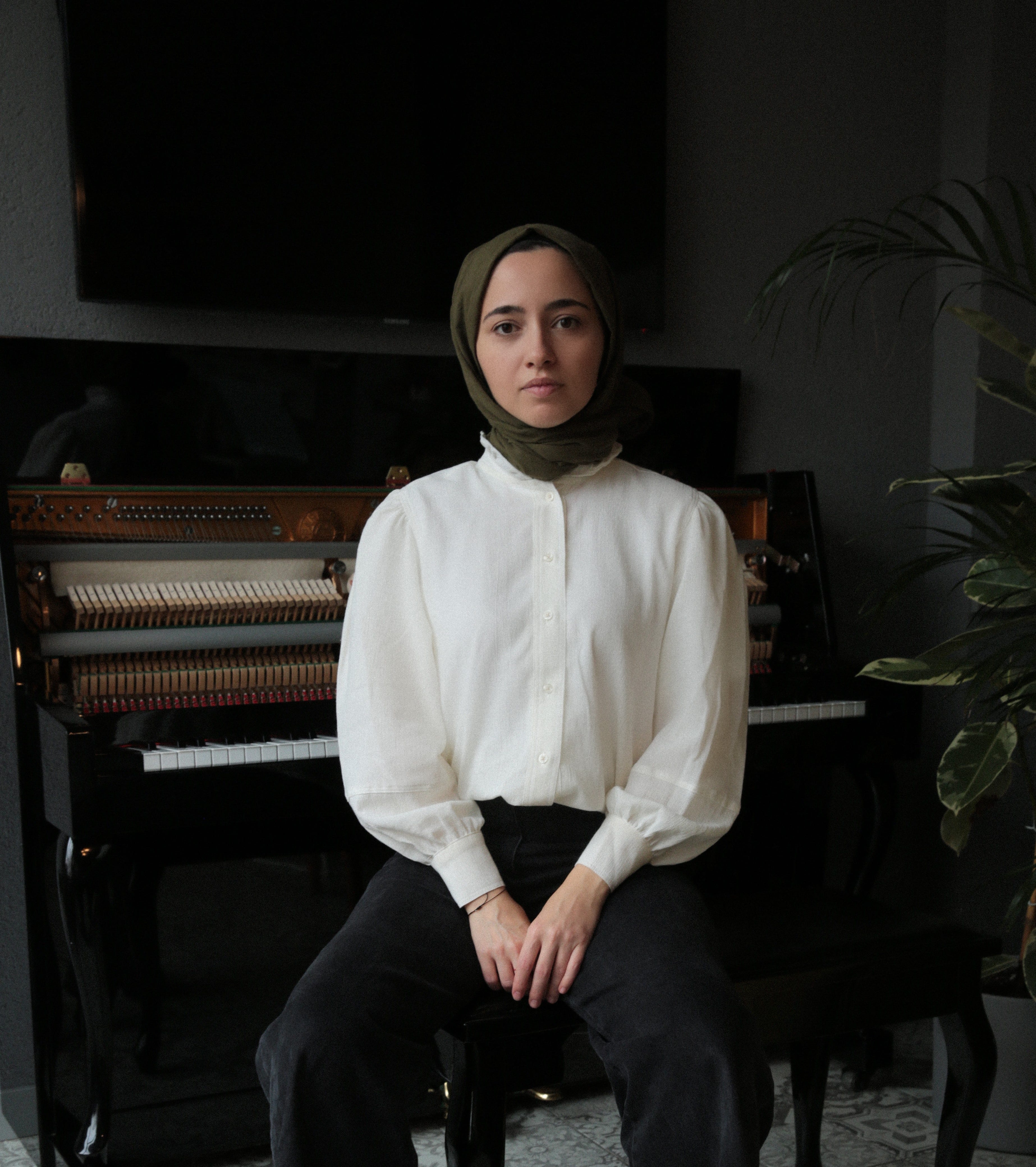
In the ubiquitous world of soft piano music we now inhabit, it is easy to get desensitized to the peaceful, sometimes innocuous, messaging which seems inexorably tied to the aesthetic. When I first heard Büşra’s music, while it was able to communicate a familiar sense of calm and quietness, there was also a boldness, a wide compositional awareness and openness that elevated the music beyond just something “beautiful”. My ears are tickled by music in which I can ascertain a unique voice and purpose behind the sounds. I want to hear what an artist has to say beyond mirroring a basic and general emotionality, and her compositions exude a nuance and sophistication that I consider an important addition to our modern canon.
Her latest EP, Weaving, is out now on Warner Classics.
I’m always curious how people find their way to music. You started playing at age 9, what initially drew you to the piano?
To be honest, it wasn’t something we really planned. One day my father came home with a keyboard. When my mother noticed how much I liked it, she enrolled me in a conservatory near our home. I started taking lessons there on the weekends. I think since I was an only child, and because I actually loved socializing, the idea of having a “friend with a voice” was very appealing to me. I never saw the piano as a subject that had to be studied. For me, trying to honor it was more like a gesture of friendship.
You have focused on a variety of different avenues of your creative path, such as painting, ballet, architecture and interior design. How do these different disciplines feed into your approach to composing music?
Each discipline has contributed to me in different ways. While I was taking piano lessons, I was also taking ballet classes. Sometimes the pieces I worked on with my piano teacher would come up again in my ballet lessons. We would prepare a performance with them or use them for warm-ups. That made it much easier for me to understand the piece, grasp its rhythm, and memorize it. On the other hand, studying at the faculty of architecture is what truly awakened my urge to compose. Because you graduate from this faculty with the identity of a designer. From that moment on, your focus is always on creating and expressing something new. At the same time, realizing that all the themes we concentrate on when starting and designing a project also exist in music in parallel was very enlightening for me.
The title of your new EP, “Weaving”, is a reference to Anatolian rug-making and the stories that are told via this practice. Were you conscious of this metaphor before starting out to write the music for this collection, or was it a concept that appeared to you after reviewing the pieces after the fact?
I first thought about the concept, and then I wrote the pieces. For me, a story has always been the driving force. In the past, I’ve often found myself composing a piece after being deeply moved by a film. I started composing both out of a desire to make something from my own roots and identity more visible and to share it, and also out of curiosity about how these stories would reflect in my music. And of course, the fact that these patterns were created by women and served as their inner voice was also a very important detail for me.
Some people get overwhelmed when they have a lot of different passions pulling at them, others seem to thrive amidst the availability of diverse interests. Where do you fall in that spectrum?
I would definitely describe myself as a multi-task and multi-interest person. I’ve never really been able to shut myself away and focus on just one thing for days. That kind of approach doesn’t keep me in the flow, I tend to feel blocked. What works for me is to let my attention wander toward different directions and then return to the main task with a fresh perspective. That rhythm feels natural to me, though I know everyone has their own way of working.
I’m always trying to find a balance between structure and freedom, between what is familiar and what is yet to be discovered.
You have mentioned that after studying and practicing in the area of architecture and design, that music drew you back in. What made you shift your primary focus?
Studying and working in architecture and design played a huge role in shifting my focus back to music. That education gave me a strong sense of identity as a designer, and once you graduate with that mindset your whole perspective is about creating and bringing something new into the world. I began to realize that the same design principles I was applying to spaces and projects could also be translated into music. Later on, the idea of manipulating the mechanism of the piano and, through music technologies, being able to produce a wide variety of sounds from a single instrument also motivated me greatly. That recognition reignited my urge to compose and gradually made music my primary focus.
What is your composition process like; do you rely on improvisation, do you write out your pieces, a “one-take and done” kind of person, do you pour over the details?
I usually tend to write short one-minute ideas in moments when I feel very strong emotions. Over the course of months or even years, I go back and add to them. But these ideas never come when I’m forcing myself. Sometimes, while waiting for my sound engineer to be ready during a soundcheck, I play these short fragments and record them on my phone. When I listen back at home, I often realize that I’ve discovered a new idea there, because playing in large venues and traveling affects me very positively. At other times, I record my long improvisation sessions and return to them after some time has passed. For me, the essential thing is always to keep a quiet distance between myself and what I’ve written. It takes time for my mind to become clear.
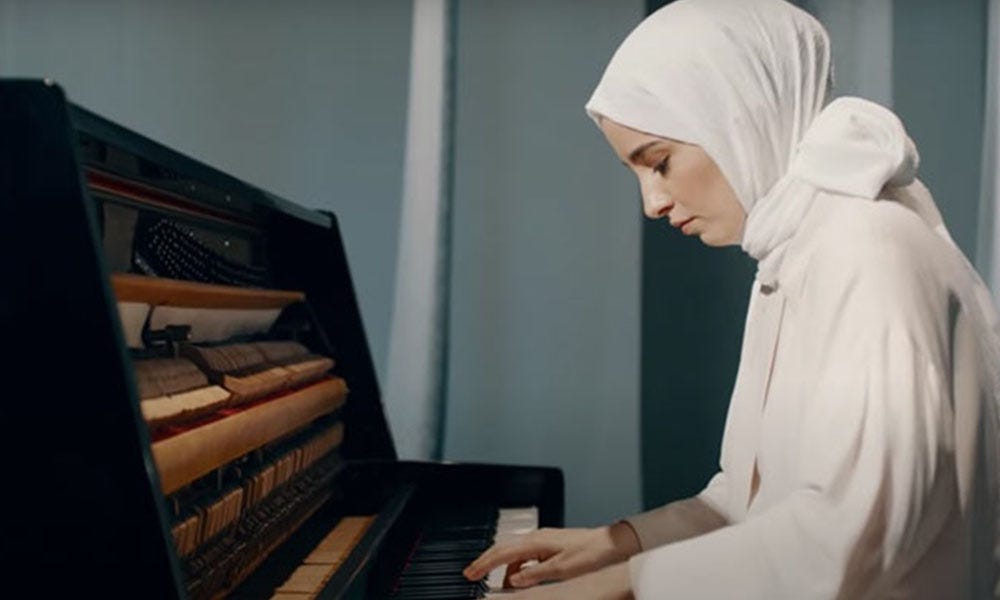
Your pieces display a very deep understanding of and commitment to harmony, but there are delightful twists and turns into darker corners or more experimental ideas. How do you view experimentation vs a more consonant approach to composing?
For me, harmony is like a home base, something I always return to. But I also believe that music, just like life, is full of contrasts, and those contrasts are what give it depth. I don’t see experimentation as separate from consonance; rather, they exist on a spectrum. Sometimes I want to create a feeling of comfort and familiarity, other times I feel the need to challenge that by leading the listener into unexpected or darker spaces. I think those twists are what keep the music alive and allow it to breathe. In the end, I’m always trying to find a balance between structure and freedom, between what is familiar and what is yet to be discovered.
Piano, and specifically solo piano with a more impressionistic bent, with softer sounds that are more ambient than traditionally classical, can be a bit ubiquitous (crowded?) these days. How do you view this trend moving forward and your place within?
It’s difficult for me to predict where this trend might go, I’ve never been good at making forecasts like that. What history teaches us, though, is that everything that begins eventually comes to an end. So I can really only speak from my own experience. After spending a lot of time both listening to and creating within this style, I realized I can no longer listen to the bare sound of a grand piano in the same way. It feels as though I’ve moved far away from that village. For me, finding a color and a narrative that resonates more closely with my own nature has been incredibly meaningful.
What I find so intriguing about your compositions is that, although there are roots in western music influences (Glass, Cage, other more recent modern classical composers), I can hear the influence of makam/microtonal, and modal aspects of traditional Turkish music come through in subtle ways, like in your piece “Dragon”. How does your culture and upbringing inform your writing?
When I’m not immersed in my own music, I often find myself listening to African, Eastern, traditional Turkish, and Sufi music, as well as microtonal guitar compositions. It’s not really a conscious or professional decision, it’s simply where my ear takes pleasure. So when my hands unconsciously drift in that direction on the piano, I think it’s because that’s what my ear is searching for. At the same time, the piano isn’t as flexible an instrument as I would wish, and that limitation can sometimes create a sense of distance for me.